
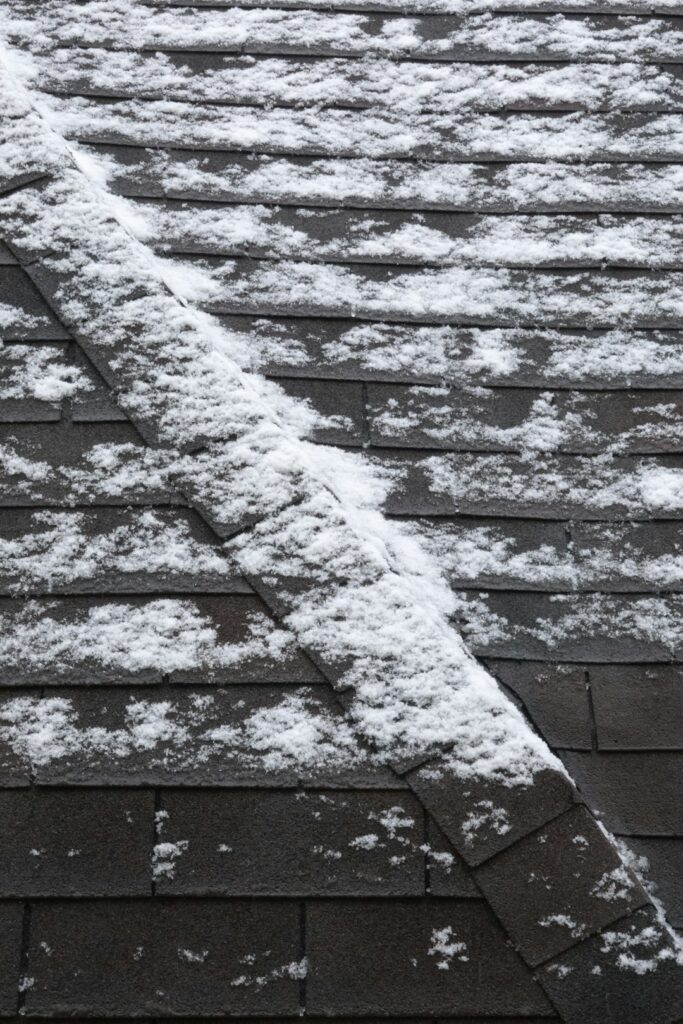
Does a roof need to be replaced just because it is old?
Not necessarily. Age is useful background information, but it does not determine a roof’s condition by itself. A well-maintained roof may perform acceptably beyond its expected service period, while a newer roof can develop problems because of poor ventilation, storm damage, installation defects, or neglected maintenance.
A roof’s condition is better judged by several factors:
- Missing, cracked, curled, or loose shingles
- Repeated leaks or water stains
- Damaged flashing around chimneys, vents, and wall intersections
- Sagging areas in the roof deck
- Granules collecting heavily in gutters
- Algae, moss, or moisture problems that are worsening
- Evidence of daylight or damp insulation in the attic
A roof that is approaching the end of its expected life deserves closer observation, but age alone is not proof that replacement is necessary.
Are all roof leaks caused by damaged shingles?
No. Shingles are only one part of a roof system, and water does not always enter directly above the visible stain.
Leaks may originate at:
- Flashing around chimneys, plumbing vents, skylights, and walls
- Valleys where two roof sections meet
- Damaged or poorly sealed vent boots
- Ice dams along eaves
- Roof penetrations for wiring or equipment
- Deteriorated underlayment
- Condensation caused by attic moisture
Water can travel along roof decking, rafters, insulation, or framing before appearing inside the home. That is why the location of an interior stain does not always identify the exact entry point.
A small stain should not automatically be treated as harmless. Even if the area dries after a storm, repeated wetting can damage wood, insulation, paint, and ceilings.
Does a small roof leak require immediate emergency action?
A leak should be investigated promptly, but not every leak requires the same response. A slow drip during light rain is different from water pouring through a ceiling, a sagging ceiling surface, or water near electrical fixtures.
Residents should treat the situation as urgent when:
- Water is entering rapidly
- The ceiling is bulging or sagging
- Electrical outlets, light fixtures, or wiring may be wet
- Strong winds have displaced roofing materials
- A large tree limb or other object has struck the roof
- The attic contains standing water
Until the source is addressed, containers can catch dripping water, and movable belongings can be cleared from the area. Avoid climbing onto a wet, icy, or snow-covered roof. Roof surfaces become especially hazardous during winter weather and after freeze-thaw cycles.
Do dark shingles make a house much hotter?
Roof color can affect surface temperature, but it is only one part of the home’s overall heat performance. Attic insulation, air sealing, roof ventilation, ceiling design, and the amount of direct sunlight often have a greater effect on indoor comfort.
A dark roof may absorb more solar energy than a light-colored roof under the same conditions. However, a properly insulated and air-sealed attic can limit how much of that heat reaches living spaces.
Changing roof color alone is unlikely to solve an overheated upper floor. Poor attic insulation, blocked soffit vents, duct leakage, and inadequate air sealing may be more significant causes.
Does attic ventilation create ice dams?
Properly designed ventilation generally helps reduce ice-dam risk, but ventilation alone does not prevent every ice dam. Ice dams form when heat escaping from the home warms parts of the roof, melts snow, and allows water to refreeze near colder eaves.
The most effective approach usually involves a combination of:
- Adequate attic insulation
- Sealing air leaks between the living space and attic
- Clear intake and exhaust ventilation
- Properly installed underlayment in vulnerable areas
- Safe snow and ice management
Adding a roof vent without addressing heat loss from the ceiling may produce disappointing results. In older homes, recessed lights, attic hatches, plumbing openings, and duct penetrations can allow warm air into the attic.
Cold winters, heavy snow, and repeated thawing and refreezing make these issues especially relevant for homes in Wolcott. An ice dam can force meltwater beneath roofing materials even when the shingles themselves appear intact.
Is more ventilation always better?
No. Ventilation must be balanced and correctly placed. Increasing exhaust ventilation without enough intake air can reduce performance rather than improve it.

A typical vented roof assembly needs a path for outside air to enter near the lower roof edges and leave near the upper roof area. Blocking soffit vents with insulation, installing vents without a continuous airflow path, or mixing incompatible ventilation designs can create moisture and temperature problems.
Unusual attic conditions can be warning signs:
- Frost on the underside of the roof deck
- Damp insulation
- Musty odors
- Rusted fasteners
- Mold-like staining
- Peeling paint near upper-floor ceilings
These signs may result from air leakage, indoor humidity, roof leaks, or inadequate ventilation. They should not automatically be blamed on a single cause.
Can a new layer of shingles always be installed over the old roof?
No. In some situations, an additional layer may be permitted, but it is not suitable for every roof. Local building requirements, the condition of the existing roof, the number of layers already present, roof slope, and the manufacturer’s installation instructions all matter.
Overlaying a roof may be inappropriate when:
- The existing roof has several layers
- The deck is soft, rotten, or structurally damaged
- There are widespread leaks
- Shingles are severely distorted
- Flashing needs replacement
- The roof surface is uneven
- The added weight could create a structural concern
A new outer layer can conceal problems beneath it. It may also make future repairs more difficult because the condition of the decking and flashing becomes harder to evaluate.
Does moss always mean the roof must be replaced?
Moss indicates persistent moisture and shade, but it does not automatically mean the roof has failed. Moss can lift or retain moisture against roofing materials, so ignoring substantial growth can shorten service life.
Removal must be done carefully. Aggressive scraping or pressure washing can damage shingles and remove protective granules. Trimming overhanging branches, improving sunlight and airflow, and keeping gutters clear may help reduce recurring moisture.
If moss is firmly attached to aging or brittle shingles, removal itself may cause damage. The material’s condition matters more than the presence of moss alone.
Are gutters separate from roof maintenance?
Gutters are part of the roof drainage system. If they are clogged, sagging, or disconnected, water can overflow against fascia boards, siding, windows, foundations, and roof edges.
In snowy areas, ice and debris can also add weight to gutter systems. Overflow near the roof edge may contribute to water intrusion, especially where flashing or underlayment is already vulnerable.
Routine checks are useful after heavy leaf fall, major storms, and winter freeze-thaw periods. Downspouts should direct water away from the foundation rather than releasing it directly beside the home.
Is a roof problem always visible from the ground?
No. Some of the most significant problems develop beneath the visible roof surface. A roof can look orderly from the yard while still having damaged flashing, deteriorated decking, trapped moisture, or attic condensation.
Ground-level checks are useful for spotting obvious concerns, but they cannot confirm the condition of every roof component. When a roof is steep, icy, snow-covered, or visibly damaged, climbing onto it creates unnecessary risk. Interior attic observations and safe visual checks from the ground are better starting points.
Understanding these misconceptions helps homeowners separate normal aging from warning signs, and minor maintenance from conditions that affect the roof’s ability to protect the building.
