

A roof drainage system protects more than shingles. It directs rainwater and melting snow away from the roof structure, walls, foundation, soil, and walkways. In Wolcott, NY, drainage deserves special attention because homes must handle heavy rain, winter snow, ice, freeze-thaw cycles, and spring runoff.
Good drainage is not simply a matter of having gutters. The roof design, slope, flashing, gutters, downspouts, outlets, soil, and foundation grading all work together. A weakness in any part of that system can allow water to collect or discharge too close to the house.
What does proper roof drainage include?
Proper roof drainage moves water from the roof surface to a safe discharge point without allowing prolonged pooling or uncontrolled overflow. The main components include:
- Roof slopes that direct water toward eaves, valleys, gutters, or designed drainage outlets
- Flashing around chimneys, walls, skylights, vents, and roof-to-wall transitions
- Gutters sized for the roof area and expected rainfall
- Downspouts positioned to receive water from gutters without excessive overflow
- Extensions or underground drainage that carry water away from the foundation
- Soil grading that slopes away from the house
- Clear paths for melting snow and ice
A roof can have intact shingles and still have drainage problems. Water may be entering through a valley, backing up behind an ice dam, overflowing a gutter, or soaking into the fascia and roof edge.
How should gutters and downspouts be arranged?
Gutters should be installed with a consistent, gentle slope toward their outlets. They should not sag between fasteners or hold standing water after a storm. A small amount of residual moisture may remain, but repeated pooling indicates poor pitch, deformation, clogging, or an outlet problem.
Downspouts should be located where they can collect water efficiently, particularly below roof valleys and at long gutter runs. A single downspout may not be adequate for a large or complex roof. Overflow at one location can cause concentrated damage to siding, trim, landscaping, and soil.
Water should discharge several feet away from the foundation whenever site conditions allow. Short extensions that release water directly beside the house often create wet basement conditions, foundation seepage, erosion, or frost-related movement. Underground drainage can be useful, but buried lines must have a suitable outlet and should not be installed where they are likely to freeze or become blocked.
Why do roof valleys need special attention?
Roof valleys collect water from two sloping roof sections, so they carry a larger flow than most other roof areas. Leaves, sticks, snow, and ice can slow drainage in these locations. Valley flashing must remain properly positioned and free from damage, punctures, or exposed fasteners that can create leak paths.
A valley that discharges onto a lower roof section can also create a concentrated stream. The lower roof, gutter, and flashing beneath that point must be able to handle the added water. Signs of trouble may include dark staining, loose granules, lifted shingles, exposed underlayment, or dampness in the attic after heavy rain.
How do winter conditions affect roof drainage?
Snow and ice can interrupt drainage even when gutters are clean. Melting snow may travel beneath snow cover, refreeze at colder roof edges, and form an ice dam. Water trapped behind the dam can back up beneath shingles and enter the attic or upper walls.
Reducing the risk involves several parts of the building system:
- Adequate attic insulation helps limit heat escaping through the roof.
- Proper attic ventilation helps reduce uneven roof temperatures.
- Air sealing around ceiling penetrations limits warm air movement into the attic.
- Clear gutters and downspouts give meltwater a better path away from the roof.
- Proper flashing helps limit damage if water backs up temporarily.
Ice dams are not caused only by full gutters. They are often connected to heat loss, roof temperature differences, snow cover, ventilation, and weather patterns. Removing snow or ice from a roof can also be hazardous and may damage shingles. Roof access during icy conditions should not be attempted without suitable equipment and training.
What maintenance schedule works for a typical home?
Drainage inspections are most useful before the wettest and coldest parts of the year. A practical schedule includes:
- Early spring: Check for damage caused by snow, ice, fallen branches, and freeze-thaw movement.
- Late spring or early summer: Remove leaves, seed pods, and roof debris before frequent thunderstorms.
- Late summer: Inspect flashing, gutter alignment, downspout connections, and areas where water has eroded soil.
- Autumn: Clear gutters and confirm that downspouts are open before leaves and snow accumulate.
- After major storms: Look for overflowing gutters, displaced components, new stains, and water collecting beside the foundation.
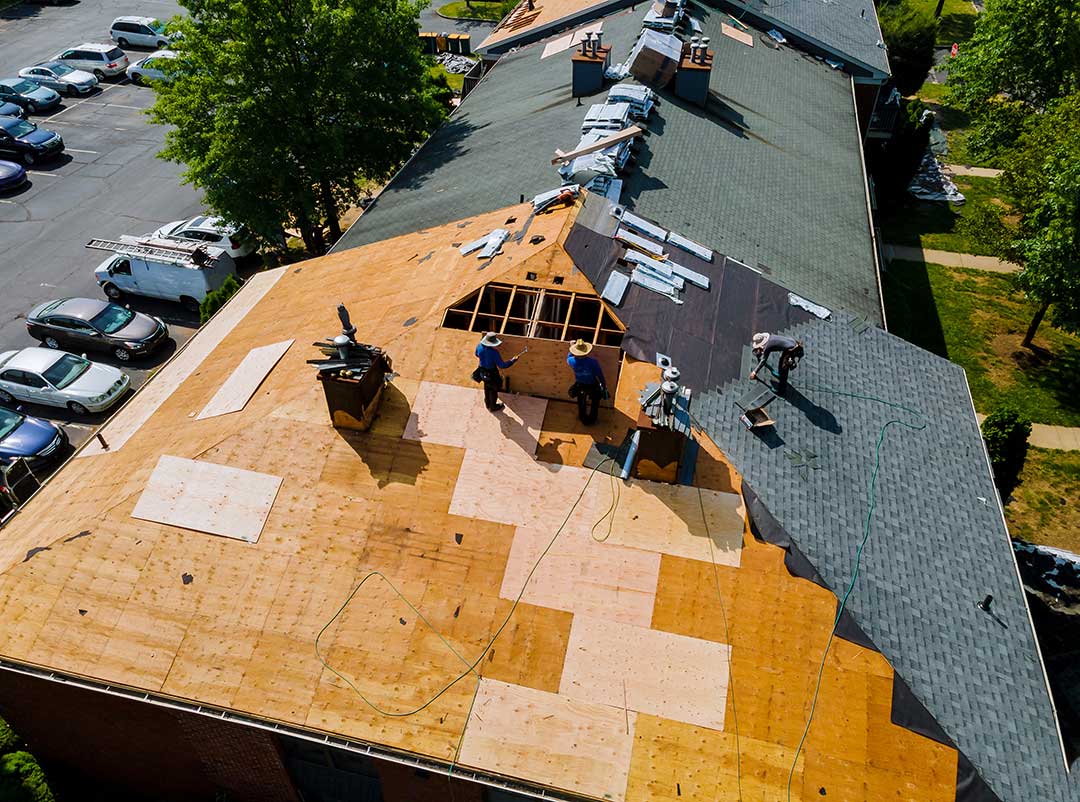
Gutter cleaning alone does not address every drainage concern. Debris may be hidden under guards, inside downspout elbows, or at underground outlets. During inspection, check whether water flows continuously through the system rather than spilling over the front or back edge.
How can drainage problems be recognized from the ground?
Many warning signs are visible without climbing onto the roof. Watch for:
- Water stains below eaves or at roof-to-wall intersections
- Peeling paint or softened wood near fascia and soffits
- Rusted gutter seams or separated joints
- Splash marks and bare soil below downspouts
- Basement dampness after rain
- Mold-like staining on exterior walls
- Sagging gutters
- Shingles that remain wet long after nearby roof areas have dried
- Ice buildup concentrated along roof edges
- Soil erosion beside the foundation
A single event does not always identify the source. For example, water appearing near a basement wall may result from roof discharge, surface grading, a foundation crack, or several conditions combined.
Are rain barrels or splash blocks enough?
Rain barrels and splash blocks can help manage water, but they are not universal solutions. A splash block should be long and stable enough to direct water away from the foundation without allowing it to wash out the soil. It should also remain properly positioned after frost movement and heavy rain.
Rain barrels must be secured, screened, and maintained so they do not overflow against the house. Their capacity may be quickly exceeded during a heavy storm, so an overflow path is necessary. They should not be treated as the only drainage method for a large roof area.
What should be done when water pools on a low-slope roof?
Standing water on a low-slope roof requires attention because repeated ponding can stress roofing materials, seams, flashing, and structural components. The cause may be inadequate slope, a blocked drain, a damaged membrane, deflection in the roof deck, or a drainage layout that cannot handle the roof area.
Do not cut new roof drains or create openings without a proper design. Water may be directed into walls, insulation, electrical components, or concealed framing. Where structural damage, active leaks, unsafe roof access, or persistent ponding is present, evaluation by a qualified roofing or building professional is warranted.
Effective roof drainage is a combination of design, maintenance, and site management. Keeping gutters open matters, but so do sound flashing, adequate downspouts, attic temperature control, safe discharge points, and grading that keeps water away from the house.
