
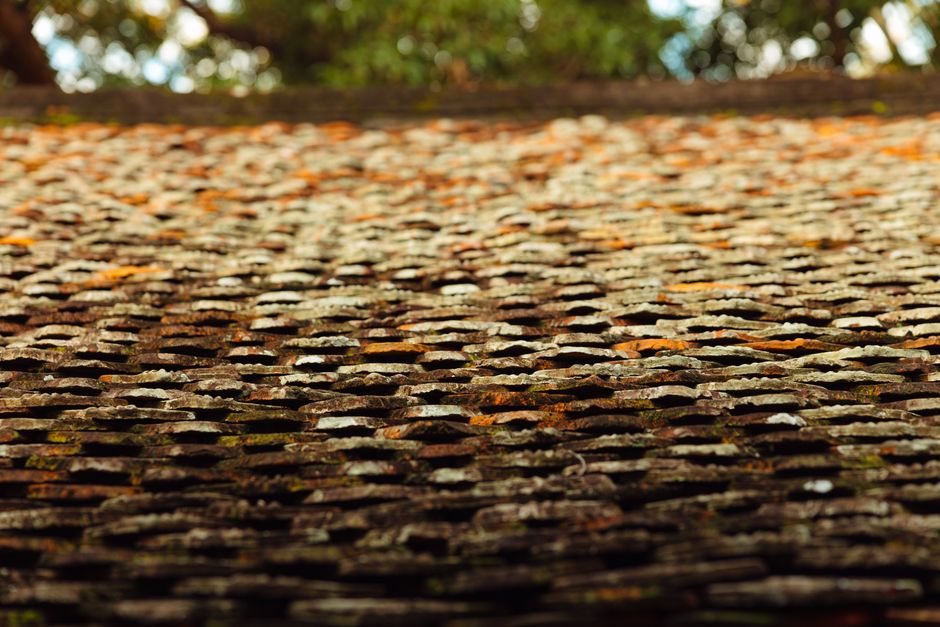
What Do Curling and Cracked Shingles Mean?
Curling and cracking are signs that asphalt shingles are losing their ability to protect the roof. Curling usually appears as lifted or rolled edges, while cracking shows up as splits, fissures, or lines across the shingle surface. Both conditions can allow water to move beneath the shingles and may worsen during wind, rain, freezing temperatures, and snow.
A few damaged shingles do not always mean the entire roof needs replacement. The right response depends on the age of the roof, the number of affected areas, the condition of the underlying materials, and whether water has entered the attic or living space.
How Can Shingle Curling Be Identified?
Curling is easiest to see from the ground with binoculars, although some signs may be visible from a window or attic. Common patterns include:
- Corners that turn upward or downward
- Shingle edges that no longer lie flat
- Raised tabs or rows that appear wavy
- Shingles that look brittle, uneven, or distorted
- Exposed areas where wind has lifted the shingle surface
Curling may occur across an entire roof slope or in isolated sections. Widespread curling often points to age, long-term weather exposure, ventilation problems, or installation conditions. A small area may be related to localized moisture, concentrated sun exposure, or wind damage.
What Causes Asphalt Shingles to Curl?
Roof shingles curl for several reasons, and more than one cause may be present.
Age is a common factor. Asphalt shingles gradually lose flexibility as their protective oils and surface materials weather away. Older shingles become less able to expand and contract with seasonal temperature changes.
Poor attic ventilation can accelerate deterioration. Heat and moisture trapped beneath the roof deck can raise shingle temperatures, increase stress on the roofing materials, and contribute to premature aging. In a cold-weather climate, inadequate ventilation can also add to condensation and uneven roof temperatures.
Improper installation may lead to early curling. Shingles that were not fastened correctly, were installed over an unsuitable surface, or were applied during unfavorable conditions may not seal properly. A shingle that does not bond firmly can lift more easily in strong wind.
Moisture may play a role. Persistent dampness beneath the roofing system can affect the deck and underlayment. Moss, debris, blocked drainage paths, or damaged flashing may keep sections of the roof wet longer than intended.
In Wolcott, seasonal freeze-thaw cycles, winter snow, spring rain, and summer heat can repeatedly expand and contract roofing materials. That ongoing movement can expose weaknesses that are less noticeable during mild weather.
What Causes Shingles to Crack?
Cracking happens when the asphalt surface or reinforcing material splits. There are two common forms.
Surface cracking may appear as small lines or a pattern resembling dried mud. This can result from gradual aging and repeated expansion and contraction.
Splitting is deeper and may extend through the shingle. It can be associated with thermal movement, brittle materials, impact, installation stress, or prolonged weather exposure.
Cracks are especially concerning when they cross the shingle’s main water-shedding area or appear around fasteners, valleys, vents, chimneys, and roof edges. These areas already receive concentrated water flow or experience greater wind exposure.
Can Curling or Cracked Shingles Be Repaired?
Limited damage can sometimes be addressed without replacing the whole roof, but repairs are most suitable when the surrounding shingles are still flexible, well-bonded, and in generally good condition.
A repair may involve replacing individual shingles, renewing damaged flashing, correcting a ventilation issue, or addressing a small area of water-damaged roof decking. Simply applying roofing cement over a large crack or pressing down a curled edge is usually not a durable solution. Sealants may provide temporary protection in a limited situation, but they do not restore a shingle that has become brittle or structurally weak.
A repair is less likely to be worthwhile when:
- Curling or cracking is widespread
- Shingles are brittle and break during handling
- Granules are missing across many areas
- The roof is near or beyond its expected service life
- Leaks have occurred in multiple locations
- The underlayment or roof deck is also deteriorated
The surrounding material matters as much as the visibly damaged shingle. Replacing one shingle on an otherwise failing roof may only delay a larger problem.
How Can Someone Check for Related Water Damage?
A roof surface may look only mildly damaged while water has already reached the structure below. After noticing curling or cracking, check the attic if it can be accessed safely.
Look for:
- Dark stains on roof decking
- Damp insulation
- Water marks around vents, chimneys, or roof penetrations
- Musty odors
- Soft or weakened wood
- Daylight visible through the roof deck
- Drips or wet areas after rain or melting snow
Inside the home, inspect ceilings and upper wall areas for yellow-brown stains, peeling paint, bubbling surfaces, or damp drywall. Water does not always appear directly beneath the damaged shingle. It may travel along rafters or roof decking before entering the living area.
If electrical wiring, wet insulation, or unstable attic flooring is present, avoid entering the area. Moisture near electrical components creates a safety hazard.
Should Curling or Cracked Shingles Be Covered Before Winter?
Temporary protection may be useful if a roof has an active opening and permanent work cannot happen immediately. A properly secured temporary covering can reduce water entry, but loose plastic, tarps, or improvised fasteners can tear shingles, trap moisture, or become dangerous in wind.
Before winter, pay particular attention to roof edges, valleys, penetrations, and areas where shingles are already lifting. Snow and ice can conceal damage and make inspection more difficult. Ice buildup along the eaves may also place additional stress on weakened shingles, especially when drainage and attic conditions are poor.
Temporary measures should be treated as short-term protection rather than a repair. The roof still needs to be reassessed once conditions are safe.
How Can Further Shingle Damage Be Reduced?
Routine observation helps identify small problems before they become interior leaks. A practical inspection schedule includes checking the roof from the ground in spring and fall, after severe wind, and after major snow or ice events.
Helpful maintenance steps include:
- Keep gutters and downspouts clear so water does not back up near roof edges
- Trim branches that scrape or shade the roof for long periods
- Remove leaves and heavy debris without walking on fragile shingles
- Check attic ventilation and moisture conditions
- Look for loose flashing around vents and other roof openings
- Watch for loose granules collecting in gutters or near downspouts
- Avoid walking on shingles that appear curled, cracked, or brittle
Roof access can be hazardous, particularly when surfaces are wet, icy, steep, or weakened. Ground-level observation and attic inspection are safer starting points for most households.
When Does Damage Require More Than a Small Repair?
A broader evaluation is warranted when damage appears across several roof slopes, leaks return after repairs, or the shingles are too brittle to handle without breaking. Structural concerns, exposed underlayment, sagging areas, or widespread moisture damage should not be postponed.
The key question is not only how many shingles are visibly damaged. It is whether the roofing system can continue shedding water reliably through the remaining seasons. In a climate with winter snow, freeze-thaw cycles, and strong weather changes, small openings can become larger once wind and moisture reach the layers beneath the shingles.
Understanding the difference between isolated damage and widespread deterioration helps homeowners make a more measured decision. A few curling or cracked shingles may call for targeted repair; a roof showing the same condition across many areas may be signaling that its useful service life is ending.
